
- More than 3500 articles
- More than 20 years of experience & expertise
- We have the widest range of off road products
- Ordered today before 3 p.m. shipped the same day
Car Parts
- gararge tools
- Axles & Suspension
- Car Protection
- Fixing material
- Fuel system
- Car Care
- Chassis & Body
- Diagnostic tools
- Electrical
- Exterior
- Filters
- Interior
- Cooling System
- Clutch
- Air intake
- Air compressor
- Engine
- Gaskets
- Brakes
- Service kit
- Hoses and Pipes
- Steering distribution
- Exhaust systems
- Wheels
- Heat & Air Conditioning
Hoses and Pipes
Car type
Brand
Quality class
Price
Brake hose
The brake hose is an essential part of the car brake system and fulfils a crucial role in bringing the vehicle to a safe stop. The brake hose connects the brake lines to the calipers or drums and ensures the transfer of brake fluid. On this page, we’ll elaborate on the important role of the brake hose, the functions it performs and the importance of regular maintenance.


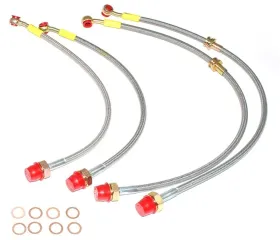


Brake hose
The main function of the brake hose is to transfer brake fluid from the brake lines to the calipers or drums. It fulfils a crucial role in transferring braking force from the brake system to the brakes on the wheels. The brake hose withstands high pressures and temperatures to ensure braking performance and vehicle safety.
IMPORTANCE OF A PROPERLY FUNCTIONING BRAKE HOSE
A properly functioning brake hose is vital for optimal brake system performance and vehicle safety. Some important aspects of a properly functioning brake hose are:
Reliable brake performance: The brake hose ensures the transfer of brake fluid, which transfers braking force to the brakes of the wheels. A properly functioning brake hose ensures reliable brake performance and quick response when braking.
Resistance to high pressures and temperatures: The brake hose must be able to withstand high pressures and temperatures that can occur during braking. A strong and durable brake hose can withstand these conditions and ensure safe braking.
Protection against leaks: A properly functioning brake hose is essential to prevent leaks. Leaks in the brake hose can lead to reduced brake performance and loss of brake fluid, which can compromise vehicle safety.
BRAKE HOSE MAINTENANCE
To ensure the brake hose continues to function optimally, regular maintenance and inspection are important:
Visual inspection: regularly inspect the brake hose for signs of wear, damage or ageing. Look out for tears, cracks, drying out or leaks. Replace the brake hose immediately if signs of damage or ageing are observed.
Replacement based on recommendations: Follow the manufacturer's recommendations for replacing brake hose. It is generally recommended to replace brake hoses every 4 to 6 years, but always check the specific recommendations for your vehicle.
Quality replacement parts: Always use high-quality replacement brake hoses that meet your vehicle's specifications. Choose good-quality brake hoses to ensure durability and reliability.